Ball tooth drills are widely used in drilling, mining and tunneling. Planar design is critical to drilling performance, including tooth arrangement, bit body, pants structure and chip removal grooves. This paper briefly analyzes planar characteristics and design differences.
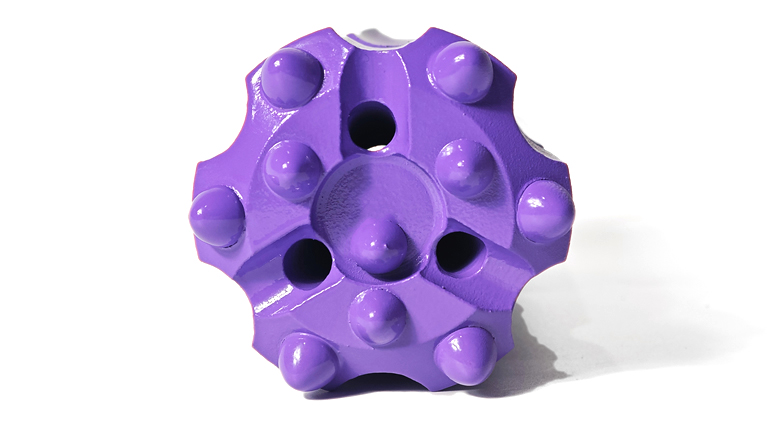
Ball tooth drills are widely used in drilling, mining and tunneling. Planar design is critical to drilling performance, including tooth arrangement, bit body, pants structure and chip removal grooves. This paper briefly analyzes planar characteristics and design differences.
In planar design, tooth layout directly affects rock-breaking efficiency. Uniform arrangement ensures stable force; spiral layout improves chip removal; concentric layout enhances centering and straightness. Bit body and pants length determine rigidity and stability. Short pants provide high speed and good energy transfer. Long pants offer strong guidance and anti-jamming ability. Standard pants present balanced performance for general conditions.
Design differences lead to different applications. High-speed drills with short pants and spiral teeth are suitable for complete hard rock. Stable drills with long pants and concentric teeth are ideal for broken formations and deep holes. General drills with standard design are widely used in conventional construction. Chip removal grooves and end-face shape also influence drilling efficiency and adaptability.
In conclusion, planar design defines the performance of ball tooth drills. Reasonable selection based on geology and construction requirements can improve efficiency, reduce wear and ensure stable operation.




 Inquiry
 Download
 Technical Support
 PRODUCT
 Events